Complete guide to baby sleep
Everything you need to know in one place — from the ideal routine to the 4-month regression, from white noise to personalized stories. Science-based advice, told simply for tired parents.
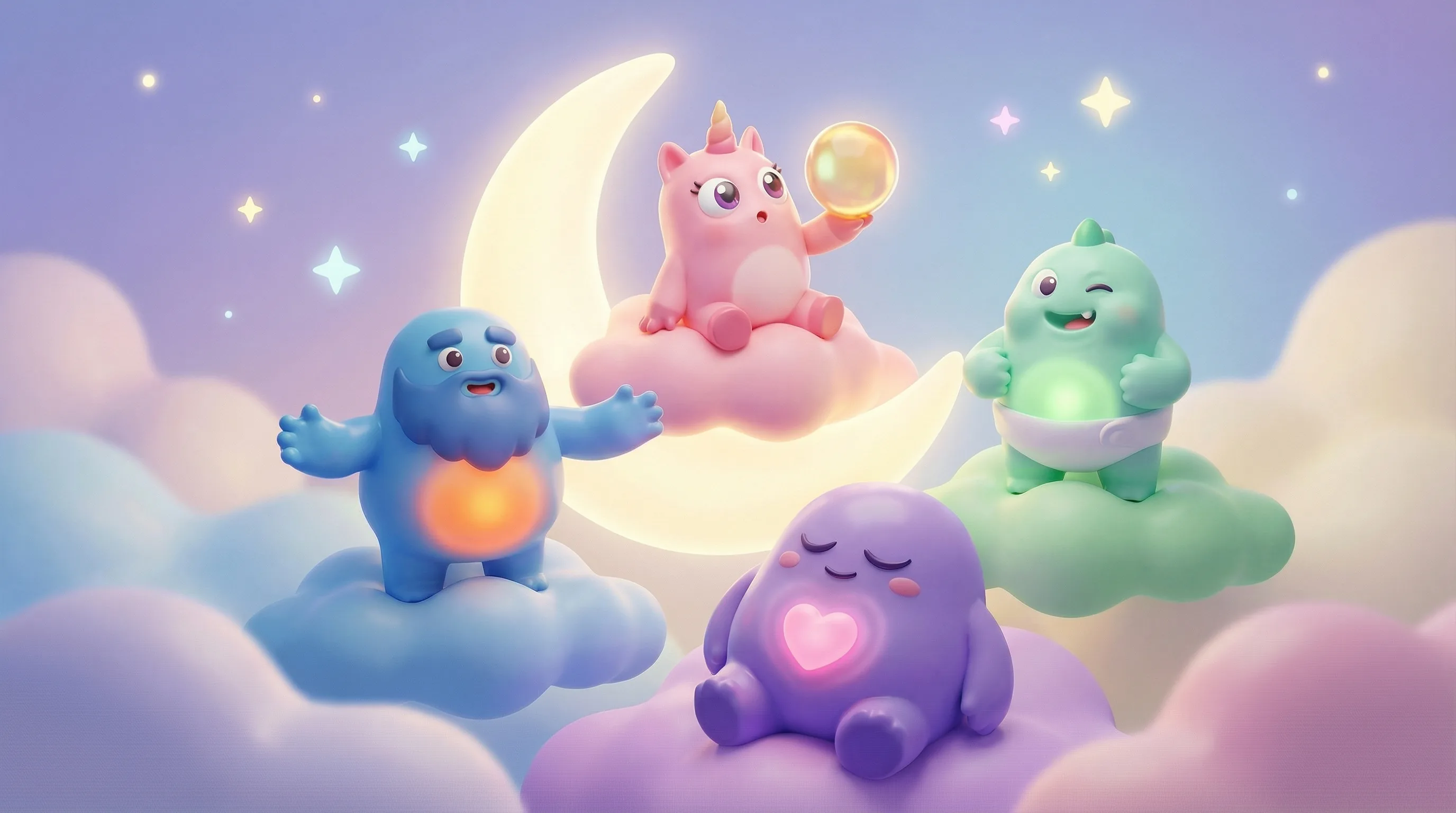
Sleep isn't a problem you "solve" — it's a journey you navigate together with your baby. This guide synthesizes 7 thematic articles into a single overview. Use it as a starting point, then dive deeper into the areas where you need more.
All the advice here is put into concrete practice in the Lulla app — free, no ads, no mandatory subscriptions. Smart timer, sleep score 0-100, 120 personalized stories, 50 ambient sounds and parent-to-parent sharing.
- 01
Evening routine — the foundation of any good sleep
In a study of 10,085 mothers across 14 countries, babies with a nightly routine fell asleep in about 18 minutes on average, against 24 without one, and spent 19 minutes awake at night instead of 67. The link is gradual: every extra evening you keep the routine shows up in the numbers.
- Warm bath at 6:30 PM — triggers the thermal sleepiness signal
- Gentle 5-minute massage with lavender to calm the nervous system
- Story or song — your voice is the best lullaby
- Put them in the crib drowsy but awake to learn self-soothing
- 02
How many hours should they sleep by age
WHO and AAP recommendations vary significantly across stages. A 3-month-old needs 14-17 hours total, while a 2-year-old gets by with 10-13. Compare your child to the real average, not the neighbor's.
- 0-3 months: 14-17 hours/day (frequent naps + short nights)
- 4-11 months: 12-15 hours/day (2-3 naps + night sleep)
- 1-2 years: 11-14 hours/day (1-2 naps + night)
- 2-3 years: 10-13 hours/day (1 nap + night)
- 03
4-month sleep regression — pure biology
Suddenly, the baby who slept 6 hours straight wakes up every 2 hours. You haven't done anything wrong — their brain is going through the biggest reorganization since birth. Cycles are maturing from 2 to 4 phases.
- Lasts 2-6 weeks on average
- Consistency with the routine is THE KEY — even when it doesn't seem to work
- Crib drowsy but awake: the moment to learn self-soothing
- Don't introduce new habits (nursing to sleep, rocking) that you'll have to unlearn later
- 04
White noise and ambient sounds — what works
White noise isn't just a trend — it covers sounds that could wake babies between cycles and recreates the womb ambient. In a randomised study of 40 newborns aged 2–7 days, 80% fell asleep within five minutes with white noise, against 25% without; it is a small study, from 1990, on newborns.
- White noise for babies: continuous, no musical spikes
- Brown noise: low frequencies, more relaxing for adults
- Natural sounds (rain, ocean) — alternatives in 6 categories
- Set a stop timer and a volume separate from notifications
- 05
Bedtime stories with the baby's name
A child hears their own name every 30 seconds and connects emotionally. 120 original stories in your language, personalized with your baby's name. 6 themes that work for all ages.
- Stars and constellations — cosmic calming
- Forest and animals — therapeutic stories
- Ocean and waves — natural rhythm
- Moon and clouds — meditation for the little ones
- 06
Sleep score — measure what matters
A daily 0-100 score calculated from 6 components: duration, bedtime consistency, night/day ratio, wake-ups, quality rated by you, and mood on waking. See trends, not just moments.
- The "Rhythm" component shows bedtime consistency
- Under 30 min variation = goal achieved
- Personalized daily tip for improvement
- Professional PDF export for your pediatrician
- 07
Parent sharing — sleep is a team effort
With Lulla, both parents see the same live data, from different phones. A 6-character invite code and you're done — your partner has access to profiles, sessions and statistics.
- Generate a code from Settings → Sharing
- Automatic live sync between devices
- All new sessions appear instantly for both
- Baby profiles and full history shared
Lulla does all of this
The free app that implements everything you've read here. Smart timer, sleep score, personalized stories, ambient sounds and parent sharing. No ads.
Available on Android and iOS
Sources
The figures quoted in this guide come from the studies below. The 2015 study shows an association, not proof of cause. This information is educational and does not replace advice from your pediatrician.
- Mindell JA, Li AM, Sadeh A, Kwon R, Goh DYT. Bedtime routines for young children: a dose-dependent association with sleep outcomes. Sleep. 2015;38(5):717–722.
- Mindell JA, Telofski LS, Wiegand B, Kurtz ES. A nightly bedtime routine: impact on sleep in young children and maternal mood. Sleep. 2009;32(5):599–606.
- Spencer JA, Moran DJ, Lee A, Talbert D. White noise and sleep induction. Archives of Disease in Childhood. 1990;65(1):135–137.
- American Academy of Pediatrics — Safe Sleep
- World Health Organization — Guidelines on physical activity, sedentary behaviour and sleep for children under 5 years of age
Still have questions?
See all frequently asked questions or write to us at contact@getlulla.app.