Lulla TeamWe review current pediatric literature and synthesise it into accessible language for parents. All recommendations follow WHO and AAP guidelines.
What the sleep score means and how to improve it
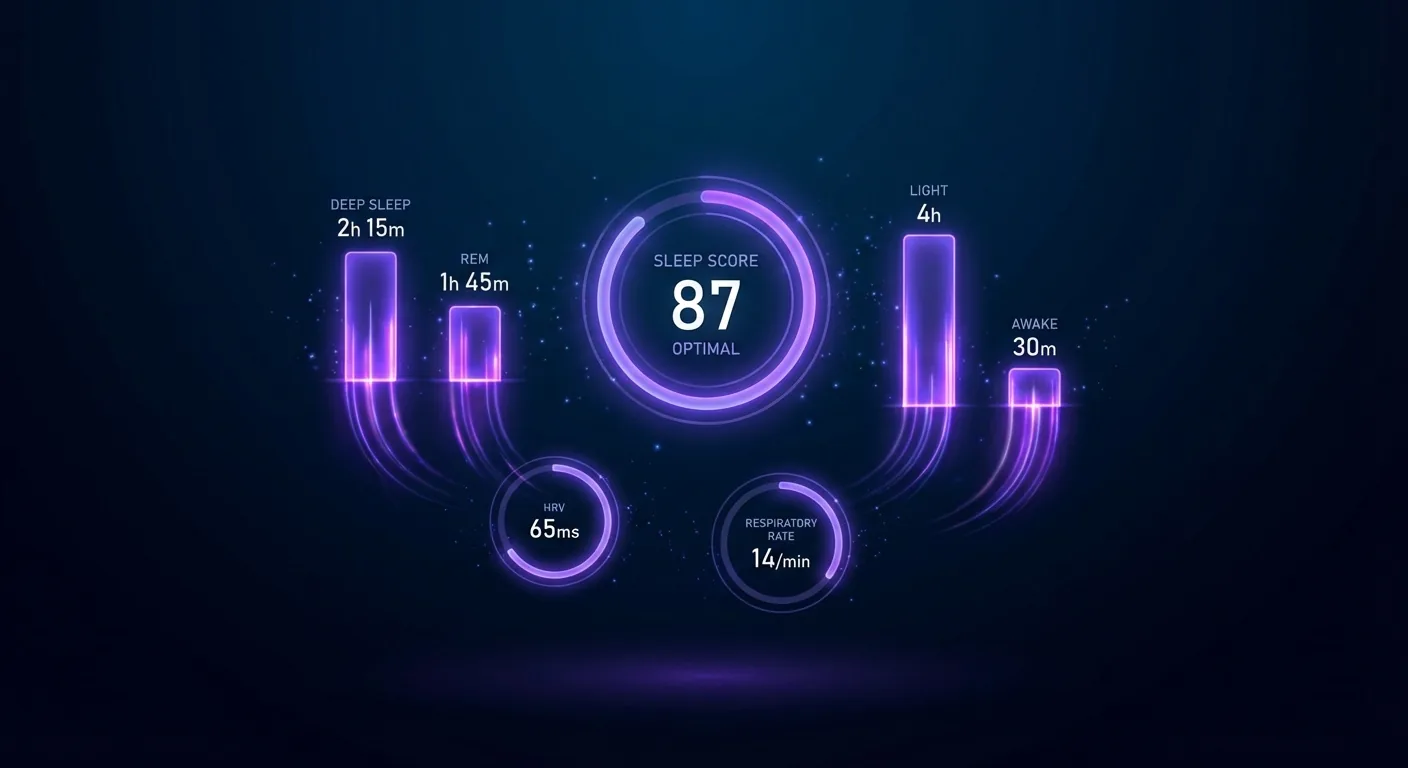
The Lulla Sleep Score is a number from 0 to 100 that tells you how well your baby slept today. It's not a judgment — it's a tool for understanding.
The 6 components
Duration (30 points) — How close the daily sleep total is to the WHO recommendation for your baby's age. A newborn needs 14-17 hours, a toddler 11-14 hours.
Consistency (20 points) — How steady the bedtime is. Variation under 30 minutes = full score. Over 2 hours of variation = 0 points.
Night/day ratio (15 points) — The ideal is 65-90% nighttime sleep. Too much daytime sleep can disrupt nights.
Quietness (10 points) — Fewer wake-ups = higher score. 0 wake-ups = 10/10.
Quality (15 points) — The rating you give at the end of each session (1-5 stars).
Mood (10 points) — How your baby wakes up. "Happy on waking" = 10/10. "Fussy" or "Crying" = lower score.
What's a good score?
- 85-100: Excellent — Congratulations! The routine is working perfectly.
- 70-84: Very good — Small adjustments can make the difference.
- 55-69: Good — The basics are solid, but there's room for improvement.
- 40-54: Could be better — Focus on the weakest component.
- Under 40: Needs attention — Read the personalized advice in Lulla.
3 quick strategies for +15 points
1. Keep the same bedtime (±15 min) for 7 days in a row — that's exactly what makes a solid bedtime routine.
2. Complete the review after every session — quality and mood are 25 free points.
3. Reduce afternoon naps if nighttime sleep is under 8 hours.
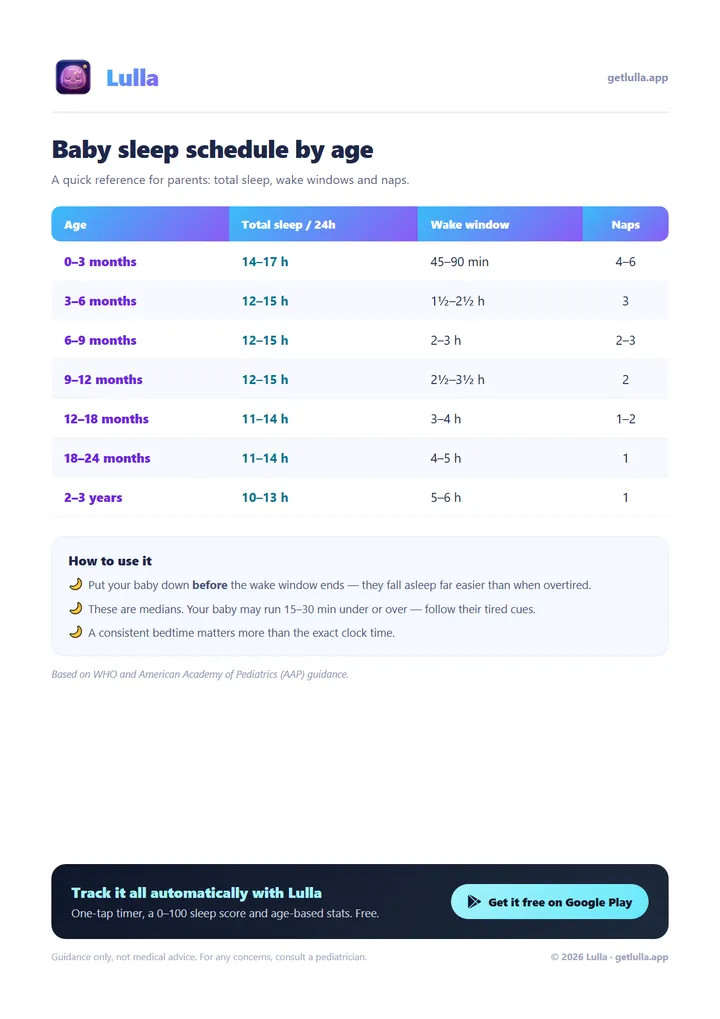
Your baby's sleep schedule, by age
Your baby's sleep schedule, by age
One chart with everything that matters: total sleep per 24h, wake windows and number of naps, from newborn to age 3. Based on WHO and AAP guidance.
Sources and references
This article draws on official guidelines and peer-reviewed studies. Verify the sources directly:
- Ohayon M et al. (2017). National Sleep Foundation's sleep quality recommendations: First report. Sleep Health, 3(1), 6–19.
- Galland BC, Taylor BJ, Elder DE, Herbison P (2012). Normal sleep patterns in infants and children: A systematic review. Sleep Medicine Reviews, 16(3), 213–222.
- Paruthi S et al. (2016). Recommended Amount of Sleep for Pediatric Populations (AASM/AAP consensus). J Clin Sleep Med, 12(6), 785–786.
- American Academy of Pediatrics — Healthy Sleep Habits (HealthyChildren.org)
📖 Read also:
- How to build the perfect sleep routine for your baby
- How many hours should your baby sleep? Age-by-age guide
- Why bedtime stories help babies sleep better
Or check out the complete baby sleep guide — all 7 articles condensed in one place.