Lulla TeamWe review current pediatric literature and synthesise it into accessible language for parents. All recommendations follow WHO and AAP guidelines.
White noise vs. natural sounds: which works better?

Every parent has heard about white noise. But is it really the best sound for sleep? The answer: it depends on age.
| Sound | Age | What it does / best for |
|---|---|---|
| White noise | 0-6 months | Mimics the sounds in the womb |
| Brown noise | 3-12 months | Deeper and warmer than white noise |
| Rain | 6+ months | Random but constant rhythm that relaxes |
| Ocean | 6+ months | Wave rhythm that syncs with sleep breathing; restless babies |
| Forest | 6+ months | Crickets and wind through leaves; daytime naps |
White Noise (0-6 months)
White noise mimics the sounds in the womb (blood flow, digestion). A newborn spent 9 months listening to constant noise at around 80dB. Total silence is stressful for them.
Recommendation: White noise below 50 dB (about as loud as a quiet conversation), continuously throughout the night, at least 2 meters from the crib.
Brown Noise (3-12 months)
Lower, deeper than white noise. It sounds like strong wind or a waterfall. Warmer and less harsh — ideal for babies who have grown used to white noise and need something different.
Natural sounds (6+ months)
Rain: The most popular natural sound. The random but constant rhythm relaxes the adult brain — and works the same way for babies.
Ocean: Waves have a roughly 8-second rhythm that syncs with sleep breathing. Ideal for restless babies.
Forest: Crickets plus wind through leaves. Best for daytime naps — it's not intense enough for nighttime.
Lulla offers 50 sounds
From pure white noise to tropical rain, ocean, forest, maternal heartbeat and many more. Try 2-3 and see which one your baby falls asleep to fastest — Lulla automatically tracks how long it takes to fall asleep. Combined with a consistent bedtime routine, sounds become a powerful sleep trigger within a few days.
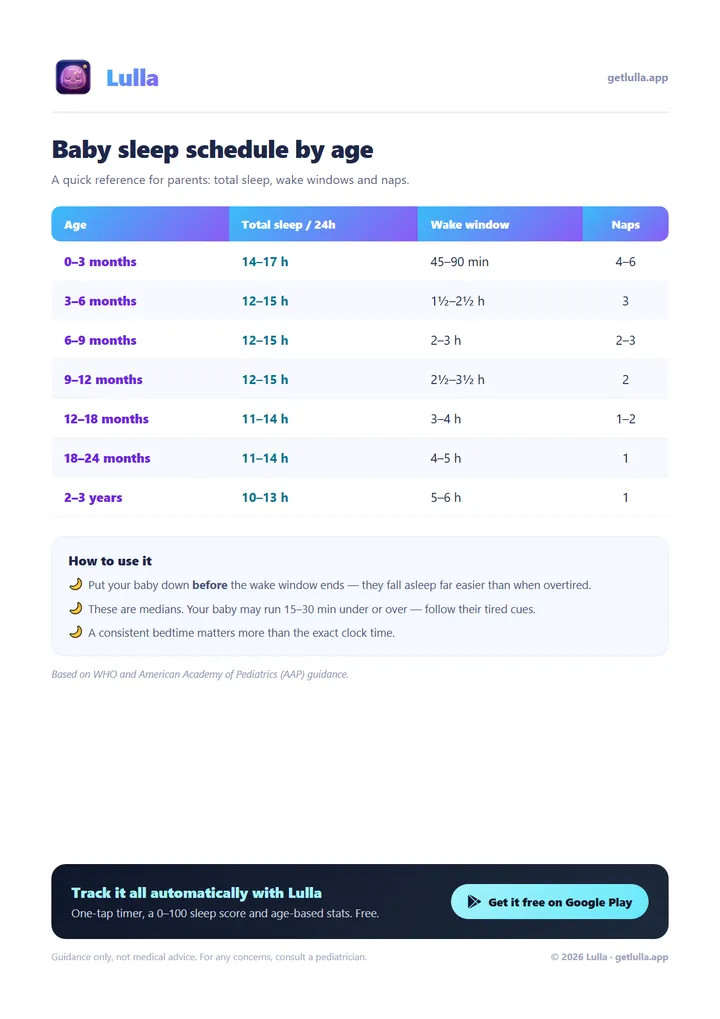
Your baby's sleep schedule, by age
Your baby's sleep schedule, by age
One chart with everything that matters: total sleep per 24h, wake windows and number of naps, from newborn to age 3. Based on WHO and AAP guidance.
Sources and references
This article draws on official guidelines and peer-reviewed studies. Verify the sources directly:
- Hugh SC, Wolter NE, Propst EJ, Gordon KA, Cushing SL, Papsin BC (2014). Infant Sleep Machines and Hazardous Sound Pressure Levels. Pediatrics, 133(4), 677–681.
- National Sleep Foundation — White Noise and Sleep
- Spencer JAD, Moran DJ, Lee A, Talbert D (1990). White noise and sleep induction. Archives of Disease in Childhood, 65(1), 135–137.
- American Academy of Pediatrics — Safe Sleep Recommendations
📖 Read also:
- How to build the perfect sleep routine for your baby
- How many hours should your baby sleep? Age-by-age guide
- Why bedtime stories help babies sleep better
Or check out the complete baby sleep guide — all 7 articles condensed in one place.