Screen time for toddlers: how much is recommended by age (WHO) and how to end it with fewer tears
The Lulla Kids team · Updated: · 9 min read



In short
- Under 2: the World Health Organization (WHO, 2019) does not recommend any screen time under age 1, or sedentary screen time at age 1.
- At 2–4: the WHO (2019) recommends no more than one hour of sedentary screen time a day; less is better. The American Academy of Pediatrics (AAP, 2026) focuses on quality and context, and for families who want a concrete limit, says it might be under one hour a day for toddlers and preschoolers.
- It's not just the minutes: the AAP (2026) says that in preschoolers, high-quality educational content is associated with better language and more prosocial behaviour, and that the effects grow when an adult takes part.
- Screen-free zones: the AAP (2026) recommends that the whole family puts phones away at meals, in bedrooms and for an hour before bed.
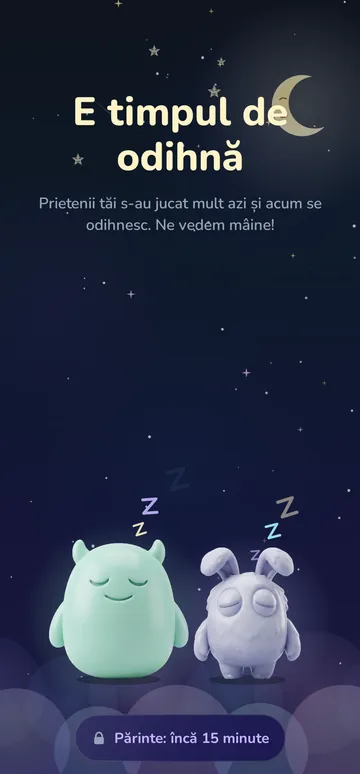
- Ending it with fewer meltdowns takes preparation: paediatrician Jenny Radesky (HealthyChildren.org, 2024) and Children and Screens (2022) advise a limit set out in advance, warnings in stages, an ending your child understands and something nice afterwards.
How much screen time does the WHO recommend for toddlers?
On screen time for toddlers, the World Health Organization (WHO) gives an age-by-age benchmark: its 2019 guidelines for children under 5 do not recommend screen time under age 1, or sedentary screen time at age 1. At ages 2 to 4, the WHO (2019) recommends no more than one hour a day; less is better.
The guidelines look at the whole day: physical activity, sleep and time spent sitting, including in front of screens. Because the WHO adds “less is better”, the hour is a ceiling, not a target.
For children aged 1–4, the WHO (2019) also recommends at least 180 minutes a day of physical activity at any intensity; at 3–4, at least 60 minutes of that should be moderate- to vigorous-intensity. When children are sitting, the guidelines encourage reading and storytelling with a caregiver.
What does the AAP recommend about screen time?
The American Academy of Pediatrics (AAP) no longer sets a fixed number of minutes for young children: its January 2026 policy statement, “Digital Ecosystems, Children, and Adolescents”, focuses on quality, context and conversation. For families who want a concrete limit, the AAP (2026) says it might be under one hour a day for toddlers and preschoolers.
That statement replaced “Media and Young Minds” (2016), the AAP guidance everyone used to quote, which told families:
- under 18–24 months: no digital media other than video chatting;
- at 18–24 months, if you introduce them: high-quality programmes, used together with your child;
- at 2–5: no more than one hour a day of high-quality programmes, watched together;
- no screens at meals, in bedrooms or for an hour before bed, a rule the 2026 statement keeps for the whole family.
The AAP (2026) now also says that infants do not learn from digital media, but occasionally watching a short, high-quality video is not harmful, and that what matters most is high-quality content and leaving room for sleep, play, physical activity and reading.
The WHO sets the ceiling; the AAP adds what your child watches and who with. The AAP (2026) even reminds paediatricians that the way society talks about digital media can make parents feel guilty.
What is the recommended screen time by age?
The World Health Organization (WHO, 2019) does not recommend screen time under age 1 or sedentary screen time at age 1, and recommends no more than one hour a day at ages 2–4; less is better. For families who want a concrete limit, the American Academy of Pediatrics (AAP, 2026) suggests under one hour a day for toddlers and preschoolers.
The WHO guidelines cover only children under 5, so for ages 5–6 the table relies on the AAP, which no longer sets a fixed limit but suggests a range for families who want one.
| Age | WHO (2019) | AAP (2026), as a guide |
|---|---|---|
| Under 1 | Screen time is not recommended. | Infants do not learn from digital media; a short, high-quality video now and then is not harmful. |
| 1 | Sedentary screen time is not recommended. | Under 18 months, children learn best from real-world interactions. For toddlers, the limit might be under one hour a day. |
| 2 | No more than one hour a day; less is better. | Under one hour a day, with high-quality content, ideally together with you. |
| 3–4 | No more than one hour a day; less is better. | Under one hour a day for preschoolers; quality matters most. |
| 5–6 | The guidelines for children under 5 do not cover this age. | Under one hour a day for preschoolers. For school-aged children (the AAP counts them from age 6): 1–2 hours a day or more of entertainment, not counting schoolwork, depending on the family's needs. |
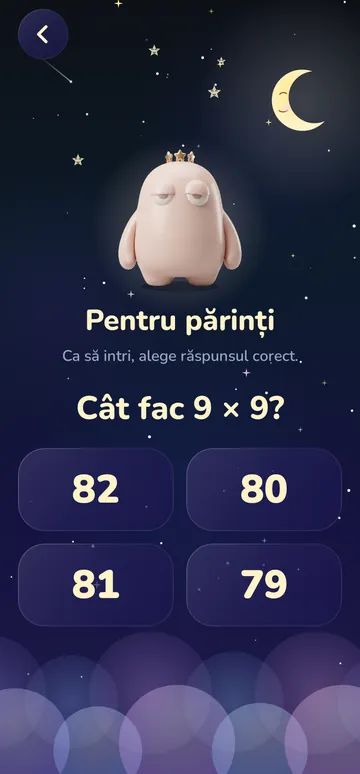
A word about us: Lulla Kids is for children aged 1–6, and children aged 1–2 play alongside a parent. Given the WHO advice for under-2s, with a child that young the decision is yours, and it's perfectly fine to wait. For an older child, our FAQ explains how the app's daily time limit works.
What counts as screen time for a toddler?
Screen time covers more than cartoons. The WHO (2019) defines sedentary screen time as time spent passively watching screen-based entertainment on a TV, computer, phone or tablet, and gives watching TV or videos and playing computer games as examples. Active screen-based games, where the child has to move, are not included.
In practice, it includes:
- cartoons and videos, on the TV or on a phone;
- games on tablets and phones, including educational apps;
- the screen in the car or in the waiting room;
- a TV left on “in the background”, which, according to the AAP (2016), distracts parents from their child and the child from play.
Video calls with grandparents are a special case: the AAP exempted video chatting from its 2016 advice to avoid screens under 18–24 months, and in 2026 it said video calls can give children two-way interaction, because someone actually answers them.
Does it matter what my child watches, not just how long?
What a toddler watches matters, not just how long. The American Academy of Pediatrics (AAP, 2026) says that in preschoolers, high-quality educational content is associated with more prosocial behaviour and better language, and that the effects grow when an adult uses it with the child. It says heavy, non-educational, solo use is associated with language delays and poorer sleep.
The AAP also links heavy solo use to delays in other areas of development, and to less reading and less pretend play. These are associations, not proof that the screen is the cause, but they show where your attention is best spent.
How do you recognise good content? According to the AAP (2026), high-quality experiences tend to:
- model social and emotional skills for children;
- have learning goals suited to the child, such as maths or reading;
- include elements of free play and encourage critical thinking.
Low-quality content, again according to the AAP, tends to have manipulative design patterns (for example, frequent rewards for playing), distractions such as ads, too many interactive elements, or frightening or violent scenes. You'll find a checklist in our guide to choosing an educational app for your child.
How do I make a family media plan?
A family media plan sets a few rules for how much, where, when, what and with whom your family uses screens. The American Academy of Pediatrics (AAP, 2026) recommends one and has a free tool for it on HealthyChildren.org, the Family Media Plan. A simple version fits on one sheet on the fridge.
- How much. A daily limit that suits your child's age, using the table above. The AAP says it can vary from one family to another, and between school days and weekends.
- Where and when not. At meals, in bedrooms and for an hour before bed.
- What. You choose in advance what gets watched or played. HealthyChildren.org, the AAP's website for parents, recommends turning off autoplay and notifications.
- Who with. Watch and play with your child as much as you can. The AAP (2026) suggests a shared family tablet rather than one of their own, and says children won't miss out on learning opportunities if you delay giving them their own tablet.
- What goes in its place. Outdoor play, books, family games: write them on the same sheet.
Planned exceptions are fine: according to the AAP (2026), a tablet can be appropriate now and then on long car journeys, on a plane or during difficult medical procedures.
How can I end screen time without tantrums?
To end screen time with fewer tantrums, prepare the moment: agree the limit before your child starts, warn them as the end approaches, use an ending they can understand, such as “one more song”, and follow it with something they enjoy. This advice comes from paediatrician Jenny Radesky on HealthyChildren.org (2024) and from the organisation Children and Screens (2022).
It's normal for this to be hard: Radesky explains that young children are still learning to deal with anger and disappointment, and meltdowns are especially likely when a child is tired, hungry, restless or stressed.
Before
- Set the limit in advance. Radesky recommends reminding your child, before they play, how much time they have and what they want to do with it. The time settings on a tablet or phone can let them know when it's time to stop.
Towards the end
- Warnings in stages. Children and Screens recommends warning them step by step, for example: “Ten more minutes on the tablet, then we get ready for the park.”
- An ending they understand. Young children may not yet understand what minutes or hours mean, notes Children and Screens, so concrete markers help: “one more song and the tablet goes to bed”, a timer or a sand timer.
- Stick to what you said. If you said “two episodes”, stop after two. Children and Screens explains why: when you waver, children learn they can sway you with words or a tantrum.
After
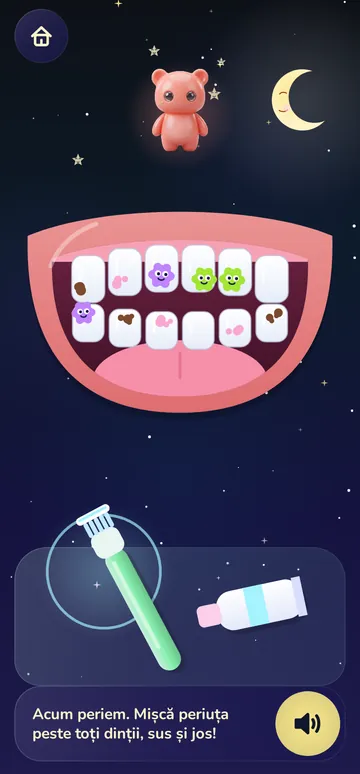
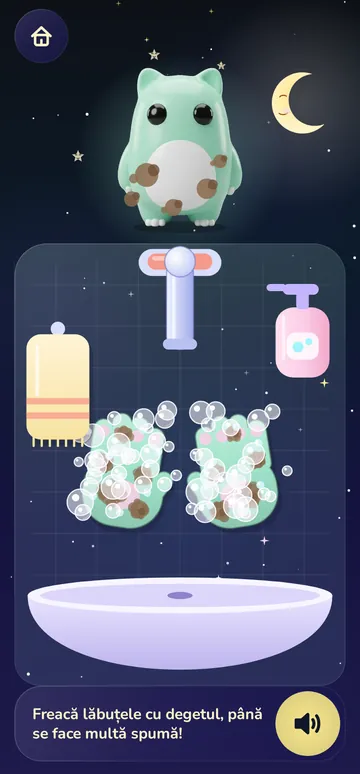
- Something enjoyable in between. Children and Screens advises against going straight to something your child doesn't like, such as tidying up or bath time. Put something nice in between, like Radesky's examples: a favourite book, a few minutes with the family pet, a small chore that makes them feel part of the family. If the battle is toothbrushing, see our ideas for calmer evenings at the sink.
- Keep it short and calm. Radesky recommends holding your position in as few words as possible: “I know it's tough, but it's time to put your tablet away.”
- A place to calm down, then reconnect. Radesky says children benefit from a spot where they feel safe and can calm down. Tell them you'll be glad to be together again when they're ready.
- Screens aren't the only comfort. The AAP (2026) notes that in preschoolers, using a phone or tablet to calm down is associated with weaker emotion regulation and problematic media habits. Offer other comforts too: your arms, a book, a walk.
And if you've lost your temper too, Radesky's advice is simple: forgive yourself.
Do screen rules apply to parents too?
Screen rules apply to parents too: the American Academy of Pediatrics (AAP, 2026) recommends phone-free meals, bedrooms and the hour before bed for the whole family. The AAP wrote in 2016 that parents' media use strongly predicts their children's habits, and paediatrician Jenny Radesky (HealthyChildren.org, 2024) notes that children of all ages resent limits adults don't follow.
- When their tablet time is over, put your phone away as well, where they can see it: “Right, I'm putting my phone away too, and I'm coming to you.” Children and Screens points out that little ones want to be just like you.
- If you catch yourself on your phone next to them, own it simply and come back, as Radesky suggests, with something like: “Sorry, I was texting. I'm putting my phone away so we can talk.”
You don't need perfect rules, just a few clear ones that you keep too.
Frequently asked questions
How much screen time should a 2-year-old have?
At age 2, the World Health Organization (2019) recommends no more than one hour a day of sedentary screen time, and less is better. The same goes for ages 3–4, and the American Academy of Pediatrics (2026), which puts the emphasis on high-quality content and time together, says that for families who want a concrete limit it might be under one hour a day. That hour includes cartoons, videos and games on a phone or tablet.At what age can a child start watching TV or cartoons?
The WHO (2019) does not recommend screen time under age 1, or sedentary screen time at age 1; from age 2, it recommends no more than one hour a day. The AAP (2026) says infants do not learn from digital media, but that occasionally watching a short, high-quality video is not harmful. If you do show them something, choose a calm, high-quality programme and watch it together.Do video calls with grandparents count as screen time?
Not in the same way: the American Academy of Pediatrics (AAP) exempted video chatting in 2016 from its advice to avoid screens under 18–24 months. In 2026, the AAP notes that video calls can give children two-way interaction. Sit with your child and help them respond, so the call becomes a conversation.My toddler has a meltdown every time I take the tablet away. Is that a problem?
Protests when screen time ends are understandable: it's hard for anyone to stop doing something they enjoy, and young children are still learning to handle anger and disappointment. On HealthyChildren.org (2024), the AAP's website for parents, paediatrician Jenny Radesky recommends talking to your child's doctor if you notice:- meltdowns almost every time you ask them to stop, however carefully you prepare the moment;
- changes in sleep, hygiene, eating or relationships with others that seem linked to too much screen time;
- that they can't get through a short car journey or a few minutes of waiting without demanding a phone or tablet.
Is screen time before bed bad for toddlers?
The American Academy of Pediatrics (AAP, 2026) recommends avoiding screens for an hour before bed and keeping devices out of the bedroom. For children who fall asleep to a video, the AAP suggests a sound machine or quiet music instead.
Sources
- World Health Organization (2019). Guidelines on physical activity, sedentary behaviour and sleep for children under 5 years of age
- World Health Organization (2019). To grow up healthy, children need to sit less and play more
- American Academy of Pediatrics (2026). Digital Ecosystems, Children, and Adolescents: Policy Statement (Pediatrics, 157(2))
- American Academy of Pediatrics (2016). Media and Young Minds (Pediatrics, 138(5))
- HealthyChildren.org (American Academy of Pediatrics) (2026). Helping Kids Thrive in a Digital World: AAP Policy Explained
- HealthyChildren.org (American Academy of Pediatrics) (2026). How to Make a Family Media Use Plan
- HealthyChildren.org (American Academy of Pediatrics) (2024). Screen Time & Temper Tantrums: Helpful Tips for Parents (Jenny Radesky, MD)
- Children and Screens: Institute of Digital Media and Child Development (2022). Shifting Off Screens
General information for parents. It does not replace advice from your paediatrician or dentist.
A little, done well, with a predictable ending
500 games for children aged 1–6, with no ads and no internet, and a daily limit you choose. 18 are free, the rest come with Premium.
18 free games · Premium by subscription or one-time payment · Android app in development