Activities and games for 4-year-olds: 24 simple ideas
The Lulla Kids team · Updated: · 10 min read




In short
- What 4-year-olds do: according to the CDC (2026), most children pretend to be something else during play, say sentences of four or more words, talk about something that happened to them that day and catch a large ball most of the time.
- The best play is play with you: the American Academy of Pediatrics (AAP, 2018) shows that age-appropriate play with parents and with other children helps social and emotional development, thinking, language and self-control.
- Plenty of time on the move: the World Health Organization (WHO, 2019) recommends at least 180 minutes a day of physical activity at ages 3–4, of which at least 60 minutes should be moderate to vigorous, spread throughout the day.
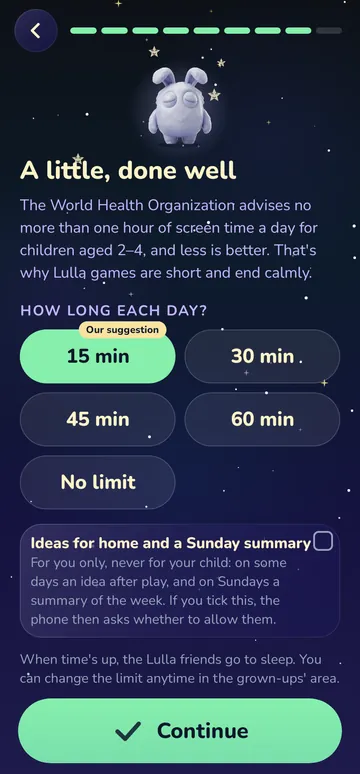
- Screens, a little and together: at ages 3–4, the WHO (2019) recommends no more than one hour a day, and the CDC (2026) no more than one hour of children's programming, with an adult alongside, and no screens in the child's bedroom.
- Toys still without small parts: the AAP (2026) notes that most choking deaths happen in children under 5, and that balloons remain a risk up to age 8.
What can a 4-year-old do?
By age 4, most children pretend to be something else during play (a teacher, a superhero, a dog), say sentences of four or more words, talk about at least one thing that happened during the day and catch a large ball most of the time, according to the “Learn the Signs. Act Early.” milestones from the CDC (the US Centers for Disease Control and Prevention, reviewed in 2026).
At around 5, the CDC list adds games with rules and taking turns, counting to 10, hopping on one foot and a conversation of more than three back-and-forth exchanges. The table below puts the milestones side by side:
| Area | At 4 years | At around 5 years |
|---|---|---|
| With other people | Pretends to be something else during play; asks to go and play with other children; comforts others who are hurt or sad; avoids danger, for example doesn't jump from high places at the playground; likes to be a “helper” | Follows rules or takes turns when playing games with other children; sings, dances or acts for you; does simple chores at home, like matching socks or clearing the table after eating |
| Talking | Says sentences of four or more words; says some words from a song, a story or a rhyme; talks about something that happened that day (“I played football”); answers questions like “What is a coat for?” | Tells a story they heard or made up, with at least two events; answers simple questions about a story after you've read it to them; keeps a conversation going for more than three back-and-forth exchanges; uses or recognises simple rhymes |
| Thinking | Names a few colours; tells you what comes next in a well-known story; draws a person with three or more body parts | Counts to 10; uses words about time, like “yesterday,” “tomorrow,” “morning” or “night”; pays attention for 5 to 10 minutes during an activity, like story time or making arts and crafts (screen time doesn't count); writes some letters of their first name |
| Movement | Catches a large ball most of the time; serves themselves food or pours water, with an adult supervising; undoes some buttons; holds a pencil between fingers and thumb, not in a fist | Does up some buttons; hops on one foot |
The milestones describe what most children do at that age; they are not a test, and every child grows at their own pace. The CDC points out that the lists do not replace a developmental screening by a professional. If your child has only just turned 4, many of the games for 3-year-olds still suit them.
Why does play matter at age 4?
Age-appropriate play with parents and with other children is a unique opportunity to support a child's social and emotional development, thinking, language and self-control, writes the American Academy of Pediatrics in its clinical report “The Power of Play” (AAP, 2018). The authors even suggest that paediatricians “prescribe” play to parents at well-child visits.
At age 4, the CDC (2026) advises parents to let their child sort out small disagreements with friends on their own, for example who gets to be which superhero, while staying close by: if your child can't manage, questions help them find other solutions. Play is exactly where this gets practised.
Movement matters too. The World Health Organization (WHO, 2019) recommends that children aged 3–4 get at least 180 minutes a day of varied physical activity, of which at least 60 minutes should be moderate to vigorous, spread throughout the day. The WHO also recommends that children this age not be strapped in for more than one hour at a time, nor sit for long periods.
You don't need expensive toys. Almost all of the ideas below are the CDC's (2026) tips for parents of 4-year-olds and 5-year-olds, using things you already have at home.
Movement games for 4-year-olds
At ages 3–4, the WHO (2019) recommends at least one hour a day of moderate to vigorous movement, such as running, jumping or climbing. By around 5, most children hop on one foot, according to the CDC (2026). Your child will enjoy it more if they choose the activity, the CDC notes; the ideas below work outdoors or in a room with space to move.
- Three options, they choose. The CDC (2026) suggests giving your child a choice: music and dancing together, playing outside or a walk. With no more than two or three options, choosing is easy.
- Swings and climbing frames. At the playground, show your child how to pump their legs back and forth to swing on their own, and help them on the climbing bars, as the CDC (2026) recommends.
- Hopping on one foot. On one foot to the door, on the other foot back. By around 5, most children hop on one foot, according to the CDC (2026).
- Simon Says. You only do what starts with “Simon says…”: “Simon says clap your hands!” The CDC (2026) gives it as an example of a game with rules to follow.
- Hot and cold. Hide a toy and guide your child with “hot” as they get closer and “cold” as they move away. The CDC (2026) lists it among the games that help with memory and attention.
- The big ball, from further away. By age 4, most children catch a large ball most of the time, according to the CDC (2026). When your child catches it often, take another step back.
Hands-on activities: drawing, scissors, puzzles
By age 4, most children hold a pencil between their fingers and thumb, not in a fist, and draw a person with three or more body parts; by around 5 they do up some buttons and write some letters of their first name, according to the CDC (2026). The activities below give little hands something to do; stay next to your child for the ones with scissors and small objects.
- The craft box. The CDC (2026) recommends a box with crayons, paper, paints, child-safe scissors and glue. Let your child draw and make things with whatever materials they like.
- Draw a person. Take turns drawing a person: you draw the head, your child adds whatever is missing. By age 4, most children draw a person with three or more body parts.
- Puzzles and blocks. The CDC (2026) recommends toys your child puts together, like puzzles and blocks. Ask what they're building and why: “That's a lovely bridge! Why did you put it there?”
- Their first name. Write your child's first name in big letters on a sheet of paper and let them colour it in or copy a few letters. By around 5, most children write some letters of their first name, according to the CDC (2026).
- Buttons, without rushing. The CDC (2026) suggests letting your child do things for themselves, even if it doesn't come out perfectly: buttoning their shirt, making their bed, pouring water into a cup. Celebrate with them and only “fix” what really needs it.
- Noughts and crosses, pairs, cards. The CDC (2026) suggests noughts and crosses, matching games and simple card games for memory and attention. Let your child lose and win in turn.
Word games, rhymes and stories
By age 4, most children say sentences of four or more words and talk about what happened to them that day; by around 5, they tell a story with at least two events and recognise simple rhymes, according to the CDC (2026). The games below give your child chances to talk and to listen, without making them repeat after you.
- “What rhymes with cat?” The CDC (2026) recommends rhyming games. Say a word and look together for others that sound the same.
- I spy. “I spy something red and round.” The CDC (2026) gives the game as an example for memory and attention; by age 4, most children name a few colours, and the CDC suggests talking about the colours, shapes and sizes of things around you.
- First, next, finally. Use the words “first,” “second” and “finally” when you play, tell stories or do chores, and ask your child what comes next, as the CDC (2026) suggests.
- The picture story. Let your child “read” a book by looking at the pictures and telling the story themselves, as the CDC (2026) recommends. By around 5, most children tell a story they heard or made up, with at least two events.
- Days of the week. Sing about the days of the week and tell your child what day it is today. The CDC (2026) suggests using words about time often, like today, tomorrow and yesterday.
- The library, to their taste. Go to the library so your child can choose books themselves, as the CDC (2026) suggests. If they love animals, borrow books about animals, then look for birds and squirrels in the park.
Pretend play, feelings and rules
By age 4, most children pretend to be something else during play and comfort others who are sad; by around 5, they follow rules and take turns when playing with other children, according to the CDC (2026). The CDC also recommends that parents talk about feelings and explain simply why something isn't allowed.
- Playing schools, playing house. The CDC (2026) recommends helping your child find things for dressing up and for playing schools or playing house. Join in when they invite you.
- “Can I play too?” Teach your child the words they need to ask for something or solve a problem, as the CDC (2026) suggests: “Can I have a turn?”, instead of grabbing the toy from another child's hands.
- Other people's feelings. When you see a sad child, say: “He looks sad. Let's bring him a teddy.” The CDC (2026) recommends helping your child notice what others feel and how they can respond kindly.
- Fear of monsters. Reassure your child and talk about what scares them, as the CDC (2026) suggests: “Monsters can seem scary, but they aren't real and can't hurt you.” Something they can do when they're scared: hug their cuddly toy.
- The calm-down corner. Set up a spot at home where your child can go when they're upset. The CDC (2026) recommends staying close by, so they know they're safe and can come to you.
- “No jumping on the bed, but…” Explain simply why it isn't allowed and offer an alternative, as in the CDC's (2026) example: “You can't jump on the bed. Do you want to go outside or put on some music and dance?” When your child does what you asked, tell them you noticed.
How much screen time is right for a 4-year-old?
At ages 3–4, the World Health Organization (WHO, 2019) recommends no more than one hour a day of sedentary screen time, and less is better. The CDC (2026) gives similar advice: no more than one hour a day, with a programme made for children and an adult watching alongside, and no screens in the child's bedroom. At around 5, the CDC also suggests a family plan for screen use and no screens at mealtimes.
For the evening, the CDC (2026) recommends a calm bedtime routine, with no screens for 1–2 hours before sleep. You'll find the recommendations for every age in our screen time by age table.
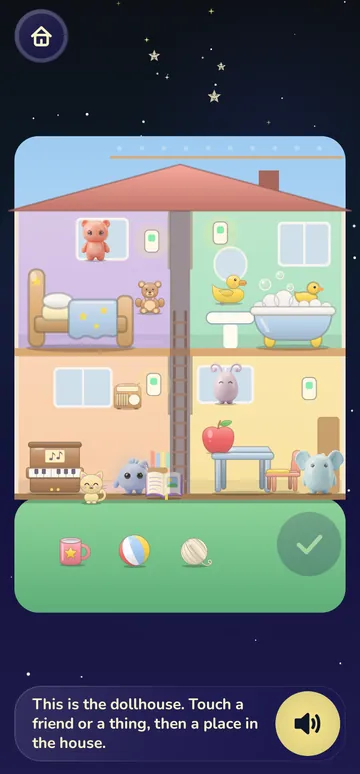
If you choose a game on your phone, first check whether it has ads, in-app purchases or autoplay; our 8 criteria for kids' apps help you decide quickly. The rest of the day is for the play in the sections above.
Safety at 4: small parts and “helpers”
Most choking deaths in children happen under age 5, writes the American Academy of Pediatrics on HealthyChildren.org (AAP, 2026). Most of these deaths are caused by balloons, balls, marbles, toy pieces and small, round foods.
What the AAP (2026) recommends:
- keep coins, marbles, balloons, small balls, pen caps and button batteries away from your child;
- avoid toys with small parts or parts that can come loose;
- check under furniture and between sofa cushions now and then for small objects that have fallen there;
- balloons remain a risk up to age 8.
At around 5, the CDC (2026) also recommends teaching your child to look for “helpers” if they get lost or need help, for example parents with children, a shop assistant with a name badge or a police officer, and to know their own name and yours, first name and surname. For the games in this article, use child-safe scissors, big blocks and large puzzle pieces, and follow the age printed on the toy's packaging.
When to talk to your child's doctor
If something about your child's development worries you, the CDC (2026) recommends talking to their doctor, sharing what you've noticed and asking about a developmental screening. Don't wait: the CDC urges parents to act early if their child doesn't reach one or more milestones or loses skills they once had.
The milestones in this article are the CDC's, and the CDC points out that they do not replace validated screening tools. Your family doctor or paediatrician is the one who can tell you whether an evaluation is needed.
Frequently asked questions
What activities are good for a 4-year-old?
For 4- and 5-year-olds, the CDC (2026) suggests drawing and crafts with child-safe scissors and glue, puzzles and blocks, rhyming games, games with rules like Simon Says, noughts and crosses or I spy, playing schools or playing house, and outdoor play where your child chooses what to do. The American Academy of Pediatrics (AAP, 2018) stresses that what matters most is playing together with parents and other children, not the toy itself.
How much physical activity does a 4-year-old need each day?
The World Health Organization (WHO, 2019) recommends at least 180 minutes a day of varied physical activity for children aged 3–4, of which at least 60 minutes should be moderate to vigorous, spread throughout the day. The WHO also recommends that children this age not be strapped in for more than one hour at a time, nor sit for long periods.
How well should a 4-year-old talk?
By age 4, most children say sentences of four or more words, talk about at least one thing that happened during the day and answer simple questions like “What is a coat for?”, according to the CDC (2026). By around 5, most keep a conversation going for more than three back-and-forth exchanges. If your child's speech worries you, the CDC recommends talking to their doctor.
At what age do children understand games with rules?
By around 5, most children follow rules or take turns when playing games with other children, according to the CDC (2026). For this age, the CDC suggests simple board or card games and Simon Says; at age 4, the CDC recommends continuing to teach your child to use their words, share toys and take turns.
How much sleep does a 4-year-old need?
The World Health Organization (WHO, 2019) recommends 10–13 hours of good-quality sleep in 24 hours for children aged 3–4, which may include a nap, with regular sleep and wake-up times. The CDC (2026) gives the same 10–13 hours for 4- and 5-year-olds and recommends a calm bedtime routine.
Sources
- Centers for Disease Control and Prevention (CDC) (2026). Milestones by 4 Years
- Centers for Disease Control and Prevention (CDC) (2026). Milestones by 5 Years
- World Health Organization (2019). To grow up healthy, children need to sit less and play more
- World Health Organization (2019). Guidelines on physical activity, sedentary behaviour and sleep for children under 5 years of age
- American Academy of Pediatrics (Pediatrics) (2018). The Power of Play: A Pediatric Role in Enhancing Development in Young Children
- HealthyChildren.org (American Academy of Pediatrics) (2026). Choking Prevention for Babies & Children
General information for parents. It does not replace advice from your paediatrician or dentist.
Play on the phone, a little and together
500 games for children aged 1–6, with no ads and no internet, and a daily limit you choose. 18 are free, the rest come with Premium.
18 free games · Premium by subscription or one-time payment





Read next
Games and activities for 3-year-olds: 24 simple ideas
Read the articleActivities for 2-year-olds: 24 simple games, indoors and outdoors
Read the articleScreen time for toddlers: how much is recommended by age (WHO) and how to end it with fewer tears
Read the articleToddler refuses to brush teeth? 12 ideas to try (ages 1–6)
Read the articleEducational apps for kids aged 1–6: how to choose a good one (8 criteria)
Read the article