Activities for 2-year-olds: 24 simple games, indoors and outdoors
The Lulla Kids team · Updated: · 10 min read


In short
- What 2-year-olds do: according to the CDC (2026), most children kick a ball, run, point to things in a book when you ask, and say at least two words together, like “more milk.”
- The best play is play with you: the American Academy of Pediatrics (AAP, 2018) shows that age-appropriate play with parents and with other children helps social and emotional development, thinking, language and self-control.
- Plenty of time on the move: the World Health Organization (WHO, 2019) recommends at least 180 minutes a day of varied physical activity at ages 1–2, spread throughout the day, and no more than one hour at a time strapped into a stroller or high chair.
- Screens, a little and together: at age 2, the WHO (2019) recommends no more than one hour a day, and the CDC (2026) no more than one hour of children's programming, with an adult watching alongside.
- Toys without small parts: the AAP (2026) notes that babies and young children are at the highest risk of choking on small objects, and that most choking deaths happen in children under 5.
What can a 2-year-old do?
By age 2, most children kick a ball, run, walk up a few stairs and eat with a spoon, according to the “Learn the Signs. Act Early.” milestones from the CDC (the US Centers for Disease Control and Prevention, reviewed in 2026). Around the same age, they point to things in a book when you ask “Where's the bear?” and say at least two words together.
At around 2½ (30 months), the CDC list adds pretend play, such as “feeding” a doll with a block, and the first two-step instructions. The table below puts the milestones side by side:
| Area | At 2 years | At around 30 months |
|---|---|---|
| With other people | Notices when someone is hurt or upset; looks at your face to see how to react | Plays next to other children and sometimes with them; shows you what they can do (“Look at me!”); follows simple routines, like picking up toys |
| Talking | Says at least two words together (“More milk”); points to at least two body parts; uses gestures other than waving and pointing | Says about 50 words; says two or more words together, one of them an action word (“Doggie run”); names things in a book; says words like “I,” “me” and “we” |
| Thinking | Holds something in one hand while using the other; tries the buttons and switches on a toy; plays with more than one toy at the same time | Plays pretend; solves simple problems, like standing on a small stool to reach something; follows two-step instructions; knows at least one colour |
| Movement | Kicks a ball; runs; walks up a few stairs; eats with a spoon | Twists things, like doorknobs or lids; takes off some clothes by themselves; jumps with both feet; turns the pages of a book one at a time |
The milestones describe what most children do at that age; they are not a test, and every child grows at their own pace. The CDC points out that the lists do not replace a developmental screening by a professional. If something worries you, see the last section.
Why does play matter at age 2?
Age-appropriate play with parents and with other children is a unique opportunity to support a child's social and emotional development, thinking, language and self-control, writes the American Academy of Pediatrics in its clinical report “The Power of Play” (AAP, 2018). The authors even suggest that paediatricians “prescribe” play to parents at well-child visits.
The same report describes “serve and return” play: your child shows you something or makes a sound, and you respond with a word, a smile or a gesture. The AAP (2018) notes that exchanges like these help children regulate their response to stress.
Movement matters too. The World Health Organization (WHO, 2019) recommends that children aged 1–2 get at least 180 minutes a day of varied physical activity, at any intensity, spread throughout the day. The WHO also recommends that children this age not be strapped in for more than one hour at a time, for example in a stroller or high chair.
You don't need expensive toys for any of this. Most of the ideas below are the CDC's (2026) tips for parents of 2-year-olds and 2½-year-olds, using things you already have at home.
Movement games for 2-year-olds
By age 2, most children run and kick a ball, and by around 30 months they jump with both feet, according to the CDC (2026). The games below use exactly these movements and work indoors or outdoors, with you close by.
- Back-and-forth ball. Gently kick a ball to your child and ask them to kick it back, as the CDC (2026) suggests. Choose a big ball, not one that fits in their mouth (see the section on safety).
- “Ready, set…” At the swing, say “Ready, set…” and wait for your child to say “Go!” before you push. This is another CDC (2026) tip: your child learns that a word of their own gets things moving.
- “Do what I do.” You clap, jump or walk like a bear, and your child copies you; then let them lead. The CDC (2026) recommends “follow the leader” games.
- Pillow obstacle course. Lay pillows, a rolled-up blanket and a box on the floor: your child goes around them, climbs over them and crawls under them. Clear away hard corners and small objects.
- Freeze dance. Put on some music and dance; when you stop it, you both freeze. If stopping is hard for your child, do it together at first, holding hands.
- Explorer walk. Go outside as often as you can, as the CDC (2026) recommends: name what you see, collect big leaves, splash through puddles in rain boots. Outdoors, movement comes naturally.
Hands-on activities: drawing, puzzles, blocks
By age 2, most children hold something in one hand while using the other, and by around 30 months they twist lids and doorknobs and turn pages one at a time, according to the CDC (2026). The activities below give little hands something to do; stay close, especially with water and with materials that could end up in the mouth.
- Simple puzzles. Puzzles with shapes, colours or animals are among the toys the CDC (2026) recommends at age 2. Name the pieces as your child fits them in: “This is the cow. Where does the cow go?”
- Chunky crayons and chalk. Draw on a big sheet of paper, or with chalk on the sidewalk. The CDC (2026) suggests drawing a line or a circle and letting your child try to copy it.
- Shaving cream on the table. Spread a little shaving cream on a tray and let your child draw in it with their fingers, another idea from the CDC (2026). Stay next to them so it doesn't go in their mouth or eyes.
- Water and sand. A tub with a little water, a few plastic cups and a spoon, or the sandbox at the park: the CDC (2026) lists water and sand toys among those suited to age 2. During water play, stay with your child the whole time.
- Block towers. Build a tower as tall as you can, then knock it down and start again. Blocks are also among the CDC's (2026) suggestions.
- What's in the jar? Put a big toy in a plastic jar with a wide lid and let your child unscrew the lid to get it out. Twisting lids appears in the CDC (2026) milestones at around 30 months.
Word games, books and songs
By age 2, most children point to things in a book when you ask and say at least two words together; by around 30 months they say about 50 words, according to the CDC (2026). The games below give your child chances to hear new words and to respond, without making them repeat after you.
- Questions about the book. When you read, ask “Where's the bear?” and later questions like “Who's this?” “What is he doing?” and “Where is he going?” as the CDC (2026) suggests. If your child doesn't answer, answer yourself and keep going.
- Body-part songs. Sing a song about heads, shoulders, knees and toes and point to each part in turn. The CDC (2026) recommends songs that name body parts.
- Opposite words. Use pairs like big and little, fast and slow, on and off, in and out while you play, as the CDC (2026) suggests: “The car goes fast… now slow.”
- Colours all around. Name the colours of the things you use: “Do you want the red crayon or the blue one?” By around 30 months, most children know at least one colour, according to the CDC (2026).
- Answer when they show you something. When your child points to a dog or brings you a toy, put what they see into words: “Yes, a big dog! He's barking.” This is the “serve and return” play the AAP (2018) describes.
- The library. Visit your local library, as the CDC (2026) recommends: your child picks a book, and at home you read it as many times as they ask.
Pretend play and little chores around the house
By around 30 months, most children play pretend, for example by feeding a doll, and follow simple routines, like picking up toys, according to the CDC (2026). The CDC also suggests letting your 2-year-old help with simple chores, like putting toys or laundry in a basket.
- Teddy's dinner. Give your child a spoon and an empty bowl and let them “feed” their teddy or doll. Then they can brush teddy's teeth: if toothbrushing is a struggle in your house, see our ideas for a toddler who refuses to brush.
- Pretend kitchen. A few plastic pots, some wooden spoons and a bowl: “cook” together, as the CDC (2026) suggests, using only safe kitchen items, with no knives, no stove and no small parts.
- The big box. A large cardboard box becomes a car, a little house or a boat, an idea from the CDC (2026). You push it “down the road,” and your child honks the horn.
- Dress-up. A hat, a scarf, an old bag: the CDC (2026) lists dress-up clothes among the toys suited to age 2. Ask your child who they are today and play along.
- Cleanup time. Put the toys in a basket together at the same time every day, for example before bath time. A short cleanup song helps your child know what comes next.
- Table helper. Let your child put the napkins or spoons on the table, carry the laundry to the basket or water a plant with a small cup. Tell them what they did: “You put out spoons for everyone.”
How much screen time is right for a 2-year-old?
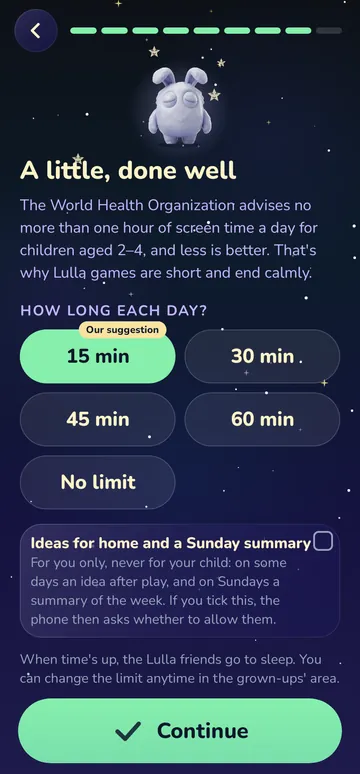
At age 2, the World Health Organization (WHO, 2019) recommends no more than one hour a day of sedentary screen time, and less is better. The CDC (2026) gives similar advice for 2-year-olds: no more than one hour a day, with a programme made for children and an adult watching alongside.
“With an adult watching alongside” is the important part: talk about what you see, just as you would with a book. That hour includes cartoons, videos and games on a phone or tablet. You'll find the recommendations for every age in our screen time by age table.
If you choose a game on your phone, first check whether it has ads, in-app purchases or autoplay; our 8 criteria for kids' apps help you decide quickly. The rest of the day is for the play in the sections above.
Safe toys for 2-year-olds: watch out for small parts
Babies and young children are at the highest risk of choking on small objects, and most choking deaths happen in children under 5, writes the American Academy of Pediatrics on HealthyChildren.org (AAP, 2026). Most of these deaths are caused by balloons, balls, marbles, toy pieces and small, round foods.
What the AAP (2026) recommends:
- keep coins, marbles, balloons, small balls, pen caps and button batteries away from your child;
- avoid toys with small parts or parts that can come loose;
- check under furniture and between couch cushions now and then for small objects that have fallen there;
- balloons remain a risk up to age 8.
For the games in this article, that means big balls, big blocks, chunky crayons and plastic jars. Also follow the age printed on the toy's packaging.
When to talk to your child's doctor
If something about your child's development worries you, the CDC (2026) recommends talking to their doctor, sharing what you've noticed and asking about a developmental screening. Don't wait: the CDC urges parents to act early if their child doesn't reach one or more milestones or loses skills they once had.
The milestones in this article are the CDC's, and the CDC points out that they do not replace validated screening tools. Your family doctor or paediatrician is the one who can tell you whether an evaluation is needed.
Frequently asked questions
What games are good for a 2-year-old?
For a 2-year-old, the CDC (2026) suggests balls, toys with buttons, simple puzzles with shapes, colours or animals, dress-up clothes, crayons and drawing supplies, water and sand toys, and blocks. The American Academy of Pediatrics (AAP, 2018) stresses that what matters most is playing together with parents and other children, not the toy itself.
How much physical activity does a 2-year-old need each day?
The World Health Organization (WHO, 2019) recommends at least 180 minutes a day of varied physical activity, at any intensity, spread throughout the day, for children aged 1–2. The WHO also recommends that children this age not be strapped in for more than one hour at a time, for example in a stroller or high chair.
How many words should a 2-year-old say?
The CDC (2026) milestones for age 2 don't give a word count: they say most children put at least two words together, like “more milk,” and point to at least two body parts. By around 30 months, most say about 50 words. If your child's speech worries you, the CDC recommends talking to their doctor.
Do 2-year-olds play with other children?
By around 2½, most children play next to other children and sometimes with them, according to the CDC (2026). At 2, many notice when another child is hurt or upset. Playing side by side, each with their own toy, is common at this age.
How much sleep does a 2-year-old need?
The World Health Organization (WHO, 2019) recommends 11–14 hours of good-quality sleep in 24 hours for children aged 1–2, including naps, with regular sleep and wake-up times.
Sources
- Centers for Disease Control and Prevention (CDC) (2026). Milestones by 2 Years
- Centers for Disease Control and Prevention (CDC) (2026). Milestones by 30 Months
- World Health Organization (2019). To grow up healthy, children need to sit less and play more
- World Health Organization (2019). Guidelines on physical activity, sedentary behaviour and sleep for children under 5 years of age
- American Academy of Pediatrics (Pediatrics) (2018). The Power of Play: A Pediatric Role in Enhancing Development in Young Children
- HealthyChildren.org (American Academy of Pediatrics) (2026). Choking Prevention for Babies & Children
General information for parents. It does not replace advice from your paediatrician or dentist.
Play on the phone, a little and together
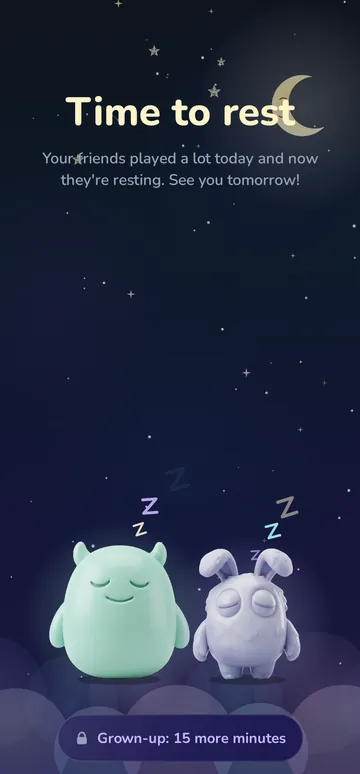
500 games for children aged 1–6, with no ads and no internet, and a daily limit you choose. 18 are free, the rest come with Premium.
18 free games · Premium by subscription or one-time payment · Android app in development